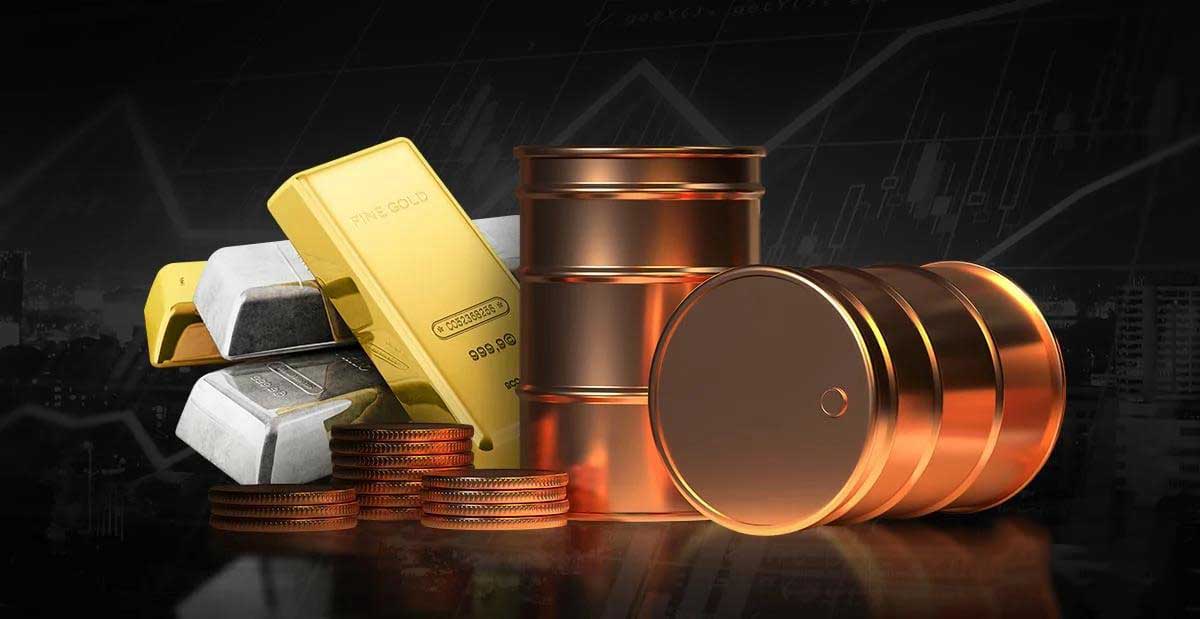
Trading is dependent on supply and demand because when there is a limited supply, the commodity will increase in price. A sudden increase in supply will cause the price of the commodity to fall sharply. In that way, commodity trading is affected by the level of demand and supply in the commodity market.
Market players must deal with the commodities exchange if they want to trade various commodities and agree on derivative contracts. Derivative contracts are generally agreements or tradeable contracts whose value changes according to the price of an asset and not from owning the asset itself. A commodities exchange makes it convenient to trade in commodities like gold without physically owning them. Some of the most known commodity exchanges include the New York Mercantile Exchange (NYMEX). The Chicago Mercantile Exchange (CME) has the most diverse tradable derivatives for speculation and risk management.
Commodities trade involves staking on how the price of a commodity will move. When people anticipate the prices will go up, they buy futures (long positions). When they think the price will go down, they sell futures (short positions).
Even though you can opt to purchase the physical commodity and sell it on your own, it is more common to find people trading futures contracts. The contracts have specifications on delivery dates, prices, and quantities, among other rules. Significant manufacturers and large-scale consumers often trade global commodities for risk management to shelter themselves from price fluctuations.
Trading commodities on the internet has attracted many investors to the venture recently. There is increased convenience and ease of transacting compared to traditional commodities trading. When they trade commodities online, investors do not need to contact a broker at the bourse to place an order. Everything you need as a trader is readily available in an accessible online trading account. You can use the commodity account to see all the charts you need and get all the analysis tools you need.
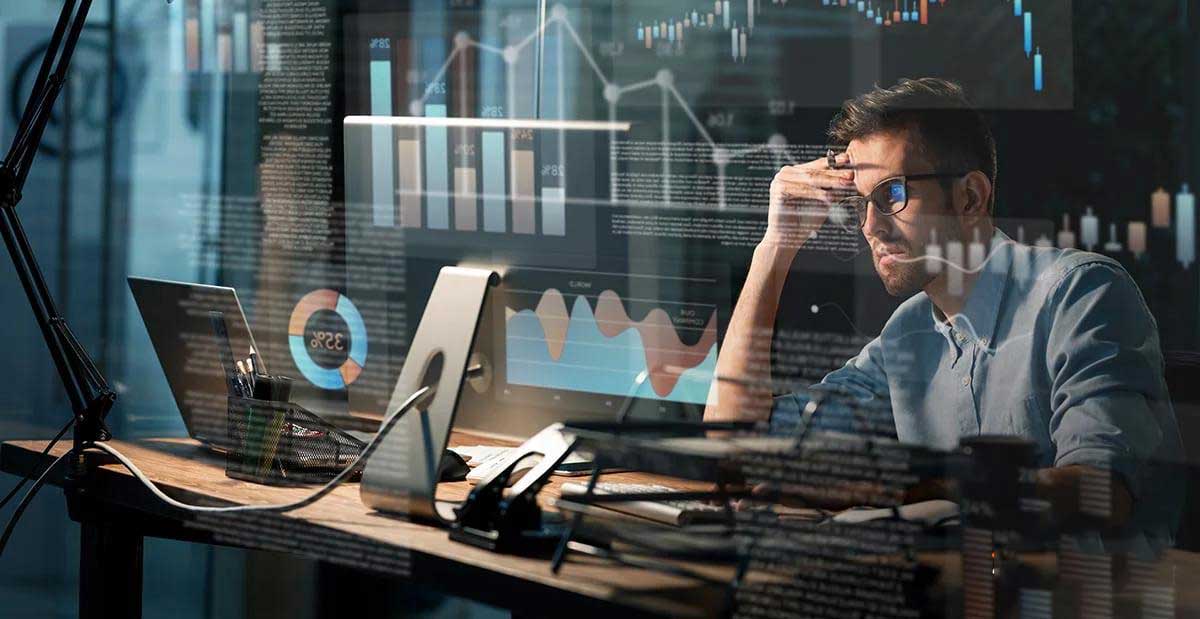
Online commodity trading gives an upper hand to investors because they enjoy instant delivery or settlement of trades, unlike in old times. There is no need to own paper certificates, and as a result, an investor can upgrade their trades immediately if they see a newer opportunity. Some strategies, such as scalping small price movements become a walkover.
Diversification of portfolios is much easier due to the wide variety of commodities and commodity stocks available. One secret about online commodity trading is that most have little to no correlation. You can expect prices to drift in different directions with equities. That protects you from the price shocks you would experience with trading a purely-equities portfolio. This makes it attractive for risk-avoiding traders.
Higher liquidity in the international commodities trading market gives speculators an extra edge because it draws in many trading opportunities. Liquid assets are just assets that you can easily buy and sell without queuing orders for a long time. Therefore, all the futures contracts fall within the liquid assets category.
The most direct form of investing in a commodity is to purchase the commodity physically. It is the oldest form of commodities investment. You can sell physical goods at a good bargain whenever you no longer find them useful. However, it carries many logistical challenges because you need to plan for storage and safe delivery.
One such trick is to buy gold by looking for a coin dealer. The coin dealers have gold coins and bars available in different sizes, quality, and rarity. Most have the years they were minted, and rare coins will attract higher prices.
Due to the sizes, you can get gold coins with many conveniences compared to most commodities. On the same note, a gold coin is relatively easy to move around with you. However, some commodities, such as beef cattle, crude oil, and bags of corn, are bulky and inconvenient. Individual investors will need help to transport most other physical commodities.
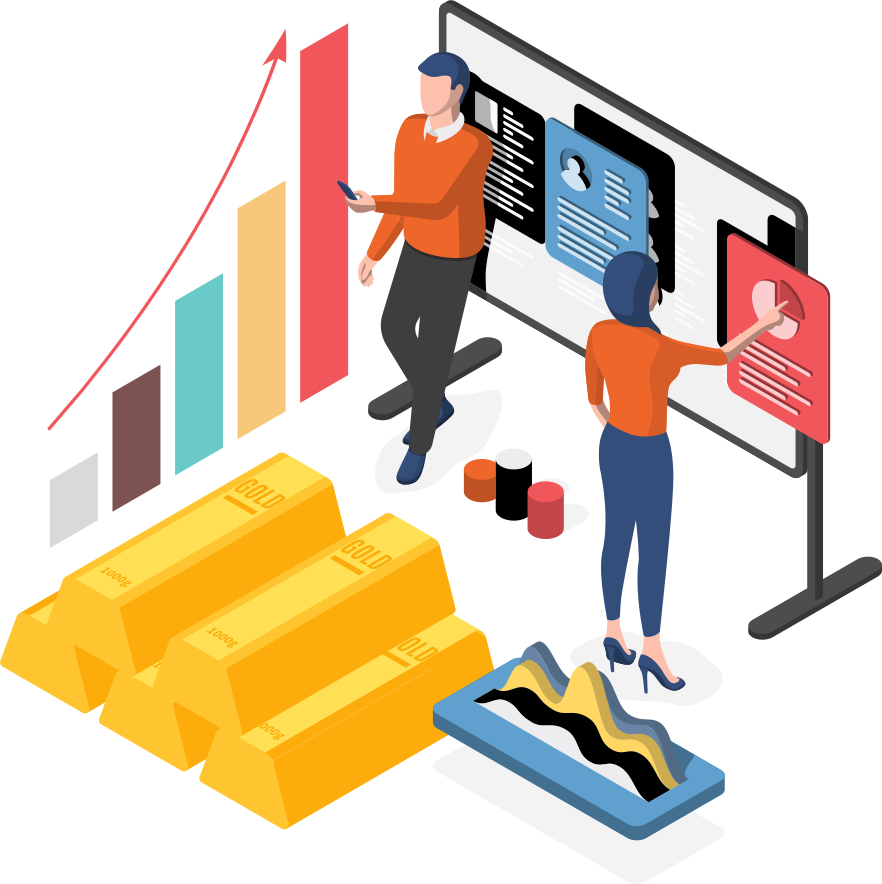
Some investment funds offer exposure to commodities. You can trade in these ETFs to avoid holding the commodities. The investment funds invest in the commodities, stocks of the commodities or a mixture of both.
Good examples of these investment funds include the SPDR Gold Trust ETF ($GLD), available on the NYSE. Investors who want to place bullish bets on oil prices would want to invest in the United States Oil Fund ($USO).
Some funds also offer investment opportunities in a cluster of different commodities. The iShares S&P provides a commodity-indexed trust, a fund benchmark containing 24 various commodities in a list of spread-out sectors.
| Type of investment | Order example | Where to get |
|---|---|---|
| Physical investment | Gold coins | Physical dealers and Bullion traders |
| Futures contracts | Online brokers | Online brokers like ATFXAI |
| Commodity stocks | SINOPEC Shangai Petrochemical Company, Ltd #SHI | Online brokers like ATFXAI |
| ETFs/Mutual Funds | SPDR Gold Trust | Online brokers like ATFXAI |
When trading commodities from home, you do not have to deal with all the chaos traditional floor trading has. You can trade right from your home computer or tablet. The convenience and transparency make it possible to even trade while on the move.
Brokerages are to thank for most of the convenience experienced in the last few years. Brokerages are responsible for providing cutting-edge commodity trading platform technologies with the right trading tools for investors. The trading platforms provide real-time analytics and technical education all from one place.

You, however, need to get a good trading broker who will offer you the right tools at affordable commissions. State-of-the-art platforms and easy access to them will ensure that you can make timely decisions and take advantage of opportunities. Whenever you have a diligent broker, you will get regular correspondence on technical updates that will improve your trading experience. For example, you will get emails introducing you to updates on the platform or adding new instruments you may be interested in.
A good commodity trading company ensures you have the right customer support from its platform, including live chat or social trading. The infrastructure also needs to have minimal lags or slippage.


With so many stakeholders involved in the market, there needs to be one unifying place where they can all interact conveniently. Commodity trading is done through software platforms that enable all farmers, producers, investors, and analysts to communicate in one place, all online. Your commodity broker provides a downloadable commodity trading platform where you can trade in a transparent, secure, and controlled environment.
Traders must deal with licensed brokers to ensure they invest with a reliable and accountable entity. Some of the parameters you need to consider when rating a trading platform include:

Complete the Live Trading Account application form. Once we have verified identity, we will set up your account.
Commodities can be split into two subsections, hard commodities (such as oil, gold, and rubber) and soft commodities (such as coffee, wheat, and corn). Hard commodities are generally higher in price, but both are traded extensively on the commodity market. Commodities are traded in numerous different exchanges all around the world. In the UK, oil, gas, and other energies are traded at the Commodities Investment. Exchange (COMEX) and non-precious metals at the London Metal Exchange (LME). At ATFXAI, we allow our customers to access the lucrative market and trade commodities all in one place in the comfort of their own homes.
If you have made the smart choice to start investing in commodities, here is a very simple 5-step guide that you can follow:
1. Choose a trading platform
Begin by selecting a trustworthy and licensed commodities broker that also allows trading of a wide variety of commodities (please note that some brokers still do not have commodity trading facilities yet). The best platforms have a wider variety of commodities, tradeable at low fees and low minimum deposits. You can create an account with commodity trading platforms like ATFXAI in under 2 minutes. Opening an online commodity account requires new investors to give identification details like names. Then they can place a strong password which they will be using to log into their accounts every time they need to check it. This should be enough to differentiate you from other members of the same trading platform.
2. Make your first deposit
Different brokers will offer different minimum deposits to start trading commodities. Some of these start as low as $10, but you would want to have $500 or more for your time to be worth it. Choose a commodities trading platform that does not charge deposit fees on payments made in major currencies. You should also access various deposit options such as bank deposits, debit/credit card deposits and other electronic solutions like PayPal. Electronic deposit solutions or credit card deposits are an investor’s favourite because they reflect a balance instantly, unlike having to mail a cheque to the broker. In many cases, you will find that the method you used to deposit will also be the method you used to withdraw funds.
3. Research the commodities market
As you have probably been doing demo trading on commodities, you can now do in-depth research into the commodity market and pick out a few promising commodities. Research the respective market and consider coupling that with the fundamental issues affecting each commodity’s behaviour. In this case, you should be looking at what affects the demand and supply for each commodity and how their prices affect the broader economic indicators. Considering that much of the trading routine also needs psychological composure, taking time to research the market will give you more confidence when placing trades. It shows that you have made investments out of careful consideration and not out of knee-jerk decisions. Taking 30 minutes to plan and execute your trade will save you much more than having to correct trades that are going against your bankroll.
4. Choose your first trade
After you have found the preferred commodity to trade, you can time the right price so that you can enter the trade. Identify the exact ticker to see the chart and its corresponding prices. It should conform to your technical and fundamental expectations. Some technical expectations include how the price has historically reacted whenever it has reached a certain level. For example, you can check whether the commodity’s price trades at historical lows or highs. People tend to buy more of the commodity when trading at historical lows because they want to wager on the price gaining over time. It always makes good financial sense to buy low or sell high. Investors who place large trades and wait for longer periods can reap huge benefits because prices tend to make reversals when they reach historical lows or historical highs.
5. Execute your first trade
To execute the first trade, once you have the right entry conditions, select the amount of money you want to risk and invest in the specific commodity instrument. Open trade, choose the right trade size and place your order.
Once your order is placed, you must monitor whether it is in your favour. One trick experienced investors use is having a specific investment amount in mind first. Next, they will place fixed percentages of the total amount in spaced trades until the amount they had budgeted has been committed. For example, if you wanted to invest $100 in a certain position, you could begin with placing $20 trades and keep on adding towards the full $100 as the trade moves towards your predicted trend.
Finding a place to buy stocks or currencies may be a walk in the park, but it is not the same for commodities. Most brokers do not support commodity trading on their platforms. Therefore, you need to explore online brokers and find which one supports commodity trading on their platform. Even so, it would be best if you found which commodities broker offers trading positions in the commodities you wish to trade. These will also occur in different forms, such as futures or options. ETFs are a good way to trade commodities through a broker.
Assess the platforms available and consider the fees charged whenever you want to begin your journey as a commodity trader on an online platform. The fees are important because you do not want to settle on a platform that cuts off much of your profits to settle fees and commissions. Your trading experience should be fair to both you and your broker.
When you trade on the ATFXAI platform, you will enjoy the right charting tools and get technical indicators to help you pick out the possible trades. Technical indicators and charts let traders identify commodities trading on historic highs or lows and judge some possible recurrent trends. Investors who do not have previous experience trading financial instruments also get to download training tools and manuals that will enable them to streamline their trading and take part in thousands of opportunities that appear every trading week.
Another essential decision you must make when choosing where to trade commodities is to do with the convenience and ease of making your deposits and withdrawals. Using an online broker is faster, safer and more confidential than the physical delivery of cheques or cash to trade commodities face-to-face with a stranger. When you opt for an online commodities trading platform, you only need to deposit cash electronically in an account you manage. You can access your commodity account and monitor your balance anytime and without logistical impediments like opening hours.
When choosing where to trade commodities online, you are welcome to research and see what the platforms offer and consider as many reviews as possible. Good reviews let you conclude how well your trading experience will go.
ATFXAI is a co-brand shared by a group of entities including:
AT Global Markets (UK) Ltd is authorized and regulated by the Financial Conduct Authority (FCA) in the United Kingdom with registration number 760555. The Registered Office: 1st Floor, 32 Cornhill, London EC3V 3SG, United Kingdom.
AT Global Markets (Australia) Pty Ltd is authorized and regulated by the Australian Securities and Investments Commission with AFSL number 418036. The registered office: Tower 2 Darling Park, Level 16, 201 Sussex Street, Sydney NSW 2000.
AT Global Markets SA (Pty) Ltd is licensed in South Africa by the Financial Sector Conduct Authority with FSP license number 44816 and a licensed OTC Derivatives Provider. The registered office: Office 1801B, 18th Floor Portside Tower, 4 Bree Street, Cape Town, Western Cape 8001. ATFXAI SA and ATFXAI Connect are trading names of AT Global Markets SA (Pty) Ltd.
ATFXAI Global Markets (CY) Ltd is authorized and regulated by the Cyprus Securities and Exchange Commission (CySEC) under the license no. 285/15. The Registered Office: 159 Leontiou A’ Street, Maryvonne Building Office 204, 3022, Limassol, Cyprus.
AT Global Markets Intl Ltd is authorized and regulated by the Financial Services Commission with license number C118023331. The Registered Office: G08, Ground Floor, The Catalyst, Silicon Avenue, 40 Cybercity, 72201 Ebène, Republic of Mauritius.
AT Global Markets (SC) Limited is licensed by the Seychelles Financial Services Authority as a Securities Dealer with License No. SD093. The Registered Office: Suite 3, Global Village, Jivan’s Complex, Mont Fleuri, Mahe, Seychelles.
ATFXAI is a trademark of AT Global Markets INTL LTD a company registered in Mauritius under FSC and all services in the Hashemite Kingdom of Jordan is offered through its Introducing Broker.
AT Global Markets LLC is a Limited Liability Company in Saint Vincent and the Grenadines with company number 333 LLC 2020. The Registered Office: Euro House, Richmond Hill Road, Kingstown, St. Vincent and the Grenadines.
ATFXAI (Cambodia) Company Limited in Cambodia is regulated by the Securities and Exchange Regulator of Cambodia with the license number 040.
HIGH RISK INVESTMENT WARNING: Trading Foreign Exchange (Forex) and Contracts for Differences (CFDs) is highly speculative, carries a high level of risk and may not be suitable for all investors. You may sustain a loss of some or all of your invested capital, therefore, you should not speculate with capital that you cannot afford to lose. You should be aware of all the risks associated with trading on margin. Please read the full Terms of Conditions.
Restricted Regions: AT Global Markets LLC does not provide services to residents of certain countries, including but not limited to Canada, Japan, Democratic People’s Republic of Korea (DPRK), Iran and United States of America (USA), or any person in any country or jurisdiction where such distribution or use would be contrary to local law or regulation.