
Start trading contracts for difference (CFDs) with ATFXAI to gain access to a variety of products with competitive spreads. Trade now on forex, indices, cryptocurrencies, commodities, shares, and more


CFD stands for Contract for Difference is a derivative financial instrument allowing traders to speculate on the price movement of assets like stocks, forex, commodities, and indices without owning the underlying asset. The CFD settles in cash, paying out the difference between the asset’s opening and closing prices, thus capturing profits or losses from market fluctuations.
CFDs often support margin trading, allowing leverage to amplify positions with a smaller capital investment. CFDs are popular for short-term trading strategies, offering investors the flexibility to trade on both rising and falling markets.
With lower capital requirements, beginner traders have more access to different financial markets. A CFD trading platform like ATFXAI lets investors trade hundreds of financial products from the comfort of their home computers.
Unlike traditional stock trading, investors trade CFDs in either long or short positions. It’s as simple as pressing the buy or short button since it doesn’t require contract signing.
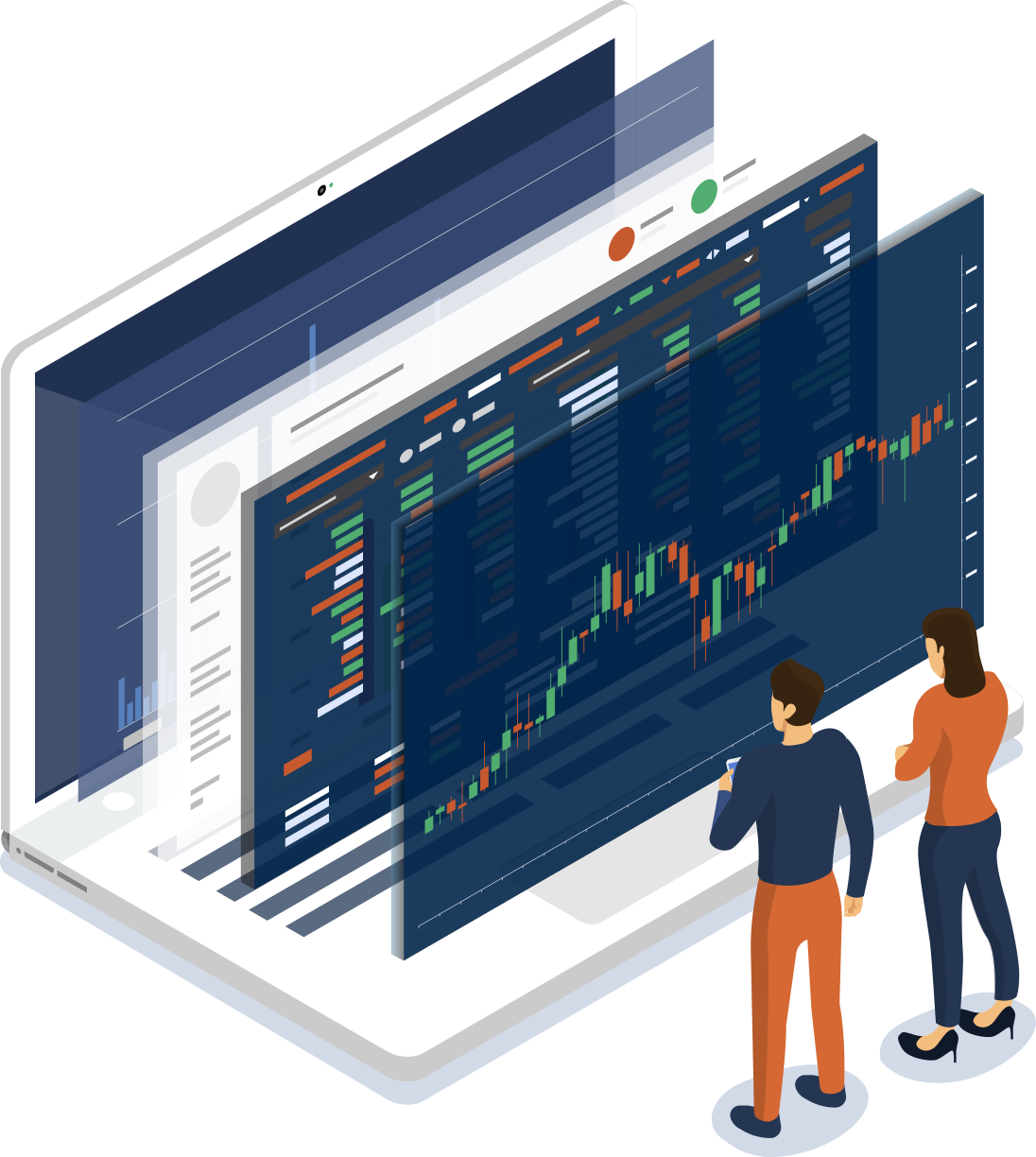
Traders enjoy real-time access to plenty of trade choices from various asset classes. These assets include local and offshore stock CFDs, commodities, and indices.
This is because you are not taking physical ownership of the underlying asset
CFDs are leveraged financial instruments and as a result you lose the full amount of the price move of the instrument which magnifies the loss that you may realise.
Due to losses, you realise if you do not protect your position with stop losses you can lose all of the amount that you deposit in your account including any profits that you may have previously realised.
Due to the impact of leverage on trading returns as well as the volatile movements in underlying instruments, the returns on CFDs are not regular or predictable thus they are not suitable for customers who seek those type of returns.
Note: 1 CFD represents 1 unit of the stock. You can always confirm each underlying asset’s minimum purchase units and its margin requirement on its order ticket before you purchase.
Contracts for difference allow a larger population of traders to invest in diverse asset classes without purchasing any physical products. As more CFD products come up every day, there needs to be an intermediary to facilitate those trades. There is no central exchange for all CFD traders to go to when they need to conduct their transactions. Instead, every CFD trader needs to approach an intermediary, the CFD broker. A CFD broker offers hundreds of financial products for the investor to choose from.
Even as CFDs represent the ideal products for short-term traders and hedge investors, finding the best CFD broker still poses a challenge to a new investor. Hundreds of CFD brokers offer competitive services, adding to the difficulty of choosing one. It also requires thorough research before settling for one firm.

To appeal to a client base, brokers work hard to develop service packages and benefits that benefit their client base more. Some brokers will focus on features that help institutional investors, and others will focus on individual retail investors. The best will have tailored benefits for everyone. A proprietary platform that works for all kinds of investors shows how much a CFD stocks broker values clients. The broker, in turn, benefits from charging some fees to the traders.

With fixed spreads, the spread does not change. A customer expects a constant amount before trading.

Floating spreads present a variable spread depending on market volatility and hours.

Commissions are charged on trades or withdrawals. If charged on trades, commissions are an agreed percentage of the spread.
When you trade CFDs (contracts for difference), you purchase the difference in price from the point at which you open the contract until it’s closed.
Traders are advised to only deal with regulated brokers if they want to safeguard their portfolio. The regulators determine the competitiveness and security standards offered by brokers who join their regulatory bodies. They are mainly clustered into jurisdictions, and that way, brokers from a specific region will have a preference for one regulatory body. ASIC, ESMA, BVIFSA, IFSC, FCA, FSA and the CIMA are some of the best regulators. Regulators like CySEC are an excellent choice because they offer a good mix of security and competition.
Complete the Live Trading Account application form. Once we have verified identity, we will set up your account.
A CFD trading platform is a software solution that brokers and financial institutions offer to facilitate digital trading from remote locations. A trading platform lets you trade CFDs without physically visiting an exchange or having to make calls to a broker. Investors, in turn, purchase or sell securities from anywhere if they can access a computer or compatible phone.
The trading platforms are free once you register an account with a broker. You can also download the demo versions of these platforms and test them before getting real accounts. Demos let you experience the platform before you make your first deposit.
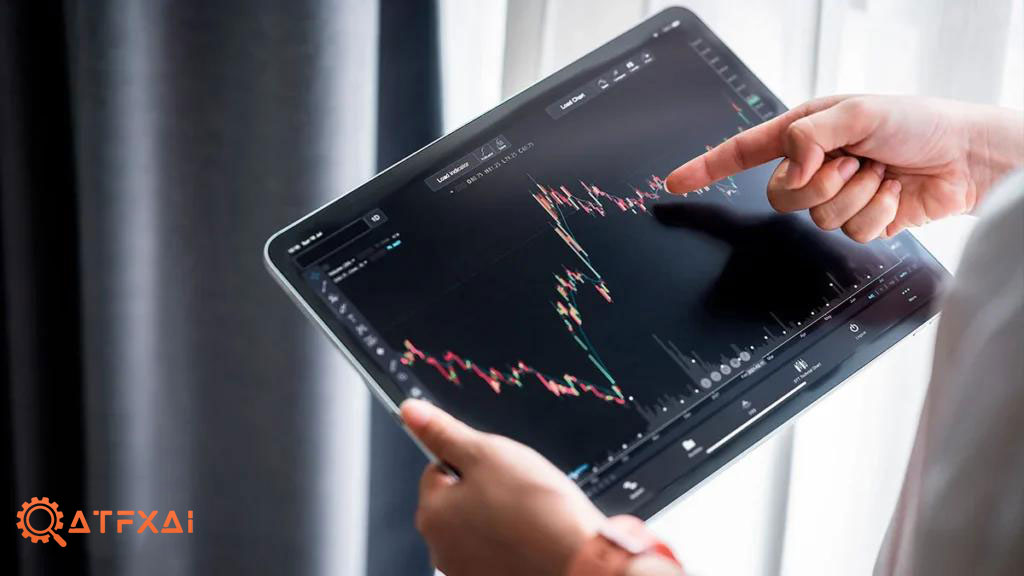
To pick the best CFD trading platform for your needs, ensure it ticks the boxes on this checklist.
The platforms usually incur costs to keep them running. They charge traders some small fees to cater to that. These charges are in the form of withdrawal fees, commissions, and spreads. Select brokers that charge low commissions. ATFXAI gives traders fee benefits that include the following.
ATFX’s AI benefits of CFD instrument pairs include:
Some ATFXAI trading tools available for members:

Some recent ATFXAI rewards and regulator acknowledgments include
ATFXAI is a well-regulated financial services provider with a presence in multiple countries. The company is authorized and regulated by different regulatory bodies depending on the location.
These regulators oversee the activities of ATFXAI to ensure that they comply with the relevant laws and regulations and protect the interests of clients.
ATFXAI Demo Account: The MT4 demo account offered by ATFXAI allows traders to experiment with new techniques and ensure they are confident before trading with real money. With investment in virtual funds, traders can familiarize themselves with the platform and test their strategies without risking any capital.
Chart packages on the MT4 demo account are free, and the account can be accessed on a desktop, tablet, or mobile devices, with compatibility for Windows, iOS, and Android devices. This allows traders to practice trading on their preferred device and become comfortable with the platform before transitioning to live trading.
Complete the Live Trading Account application form. Once we have verified identity, we will set up your account.
You can trade CFD in both rising markets and declining markets. Speculators will place ‘buy orders’ (long positions) when they anticipate the prices will appreciate and place ‘sell orders’ (going short) when they expect a decline. CFDs offer the opportunity to profit from rising and declining market trends.
As the standout advantage of trading CFDs, you can immediately realize profits. Investors, in turn, have lesser risks of potential loss when the markets are mostly bearish.
Like all forms of trading, always not that you are still exposed to some risks while trading CFD. Choose a trading style that you are comfortable with and one that will still keep your bankroll manageable if your price prediction does not materialize.
Here are some practical trading styles you can use to make consistent profits while having manageable risk exposure.
Day trading is a trading choice where investors only keep positions running for a maximum of a day. Most traders may also open and close positions on one instrument multiple times within one trading session. Day trading works best with more volatile price action on a liquid instrument. Because of cost implications, the best CFD broker offers low transaction charges
Short-term traders give priority to CFDs because speculative trades only need a small price movement for there to be profit opportunities. Because of the hunt for small price differences, short-term traders rely on technical analysis more than fundamental analysis. They focus more on the price trend than the company’s actual performance or currency.
A common variation of day trading is scalping. It is very short-term and can have positions that only remain open for seconds. You can trade CFD with small, consistent profits, which add up to a substantial amount if you stay focused.
The rationale behind closing the losses as soon as they occur is that, hopefully, the winning trades will cover the losses.
Day trading and scalping are high-probability trading techniques that bear minimal risk. Use them with tight stops and clear profit objectives always. Consider them as a trick to make 100 trades to get $100.
Position trading of CFDs requires a long-term approach to how the investor determines the likely price movement. Position trading, unlike scalping, gives the long-term price trend higher priority than how the market fluctuates in the short term.
For example, the bullish trader will keep a position open even if the day is closed on a bearish note. The strategy prescribes making more significant gains over a more extended period as long as a stop loss is not hit.
The fundamental analysis of picking the trades involves more profound research into the underlying companies’ financial performance and management track record. It involves more news-tracking than short-term strategies.
To get started, use the charts to find the trend direction and strength. It is more profitable to trade CFDs in the direction of the trend. Place the trade and keep monitoring open positions to guard against trend changes.
Long-term trades attract margin costs
Margin interest is the cost of borrowing money from a broker to trade, and it accrues daily based on the amount of margin used by the trader.
Trading CFDs with a long-term perspective, therefore, has some cost implications. CFDs are margined instruments that will attract interest over the duration you hold the positions. When a trader holds a long-term position, they are essentially borrowing funds from their broker to maintain the position until they decide to close it.
As long as the position remains open, the trader will be charged margin interest on the borrowed funds. The amount of margin interest charged is typically calculated based on the size of the position and the amount of time that the position is held open.
Always incorporate the margin costs into the trading strategies to judge whether some trades will be profitable.
An excellent way to compensate for the daily interest is to invest a higher ratio of your trades in CFD stocks with a strong trend. The price changes will cover the interest charges.
Qualities of a good trading system
If you still feel unsure about your trading strategy, consider using the following 4 characteristics to test if it is good.
Regardless of the system, always confirm how much you can lose with a single trade, as CFDs are leveraged products. When setting a profit target, set a reasonable stop-loss distance. Your stop-loss distance should be at least half the number of pips you set as the take profit.
Even as we know the importance of a trading platform and how to trade, it is vital to know the CFD broker meaning and their role in the equation. CFD brokers are intermediaries who play the market maker role. They will match orders from clients and take asset positions to hedge exposure. Brokers would profit from clients’ trades, even if they were not winning trades.
A financial institution will offer value-added services to give the clients the best value and set themselves apart from competitor brokers. Give priority to brokers who provide services such as free market analysis and trading signals. Due to competition, most of these services are free, but for the benefits you get in return, it is okay to pay a small fee. Most of the fees charged for those services are negligible to your trades. It is fair for brokers to request a minimum deposit if they want a CFD trading platform that offers the services.
Some value-added services that you should look out for from a broker include
These help traders monitor trends and deal directly from an HTML5 browser or MT4 platform without having to rely on a list of quotes like traditional exchanges.
Even if you cannot access your computer for long periods, trading alerts let you receive updates on economic events and critical economic indicators via phone texts.
Brokers have different performance speeds on their platforms. Good brokers ensure there is minimal slippage or lag. Withdrawals are executed quickly to get your money in your hands when needed.
Instead of just a handful of popular demands and instruments, you can access exotic markets from your CFD broker online. These still offer reliable execution time.
Select a trustworthy broker who updates the platform with the latest security standards.
In summary, most top-ranked brokers can meet the needs of short and long-term traders. Day traders prefer shorter periods to find opportunities, so they need to sign up with a broker who offers a more extensive range of instruments to trade daily. Short-term traders benefit more from the scouting tools that make it easier to find trading opportunities. Professional traders are more likely to register for a signal service and a detailed economic calendar. CFD brokers like ATFXAI provide formidable tools and training for professional CFD traders.
In the world of financial trading, there is an entire subculture devoted to taking advantage of small fluctuations in the price of certain stocks, commodities, or currencies. These derivatives – commonly called CFDs or contract for difference – enable individuals to trade large amounts of stock, currency, and commodity without having to physically own the underlying security. While CFDs were originally developed for use by experienced speculative traders, later generations of retail investors found them invaluable for entering the market on a budget and without requiring large amounts of capital.
A CFD (contract for difference) is a derivative that gives the buyer the right to buy or sell a predefined amount of an underlying security at a fixed price over a specified time. In general, CFDs are considered leveraged contracts because they carry a high degree of leverage and can be extremely profitable for experienced traders. They are also considered to be high-risk instruments since their value can fluctuate wildly due to changes in the price of the underlying security – often referred to as the ‘basket’ – during the life of the contract.
A CFD that is based on a stock will typically have its price adjusted every three minutes to keep up with changes in the market price of the underlying stock. Just keep in mind that you can trade CFD online and most brokers now offer CFD trading platforms for beginner traders.
ATFXAI is a co-brand shared by a group of entities including:
AT Global Markets (UK) Ltd is authorized and regulated by the Financial Conduct Authority (FCA) in the United Kingdom with registration number 760555. The Registered Office: 1st Floor, 32 Cornhill, London EC3V 3SG, United Kingdom.
AT Global Markets (Australia) Pty Ltd is authorized and regulated by the Australian Securities and Investments Commission with AFSL number 418036. The registered office: Tower 2 Darling Park, Level 16, 201 Sussex Street, Sydney NSW 2000.
AT Global Markets SA (Pty) Ltd is licensed in South Africa by the Financial Sector Conduct Authority with FSP license number 44816 and a licensed OTC Derivatives Provider. The registered office: Office 1801B, 18th Floor Portside Tower, 4 Bree Street, Cape Town, Western Cape 8001. ATFXAI SA and ATFXAI Connect are trading names of AT Global Markets SA (Pty) Ltd.
ATFXAI Global Markets (CY) Ltd is authorized and regulated by the Cyprus Securities and Exchange Commission (CySEC) under the license no. 285/15. The Registered Office: 159 Leontiou A’ Street, Maryvonne Building Office 204, 3022, Limassol, Cyprus.
AT Global Markets Intl Ltd is authorized and regulated by the Financial Services Commission with license number C118023331. The Registered Office: G08, Ground Floor, The Catalyst, Silicon Avenue, 40 Cybercity, 72201 Ebène, Republic of Mauritius.
AT Global Markets (SC) Limited is licensed by the Seychelles Financial Services Authority as a Securities Dealer with License No. SD093. The Registered Office: Suite 3, Global Village, Jivan’s Complex, Mont Fleuri, Mahe, Seychelles.
ATFXAI is a trademark of AT Global Markets INTL LTD a company registered in Mauritius under FSC and all services in the Hashemite Kingdom of Jordan is offered through its Introducing Broker.
AT Global Markets LLC is a Limited Liability Company in Saint Vincent and the Grenadines with company number 333 LLC 2020. The Registered Office: Euro House, Richmond Hill Road, Kingstown, St. Vincent and the Grenadines.
ATFXAI (Cambodia) Company Limited in Cambodia is regulated by the Securities and Exchange Regulator of Cambodia with the license number 040.
HIGH RISK INVESTMENT WARNING: Trading Foreign Exchange (Forex) and Contracts for Differences (CFDs) is highly speculative, carries a high level of risk and may not be suitable for all investors. You may sustain a loss of some or all of your invested capital, therefore, you should not speculate with capital that you cannot afford to lose. You should be aware of all the risks associated with trading on margin. Please read the full Terms of Conditions.
Restricted Regions: AT Global Markets LLC does not provide services to residents of certain countries, including but not limited to Canada, Japan, Democratic People’s Republic of Korea (DPRK), Iran and United States of America (USA), or any person in any country or jurisdiction where such distribution or use would be contrary to local law or regulation.